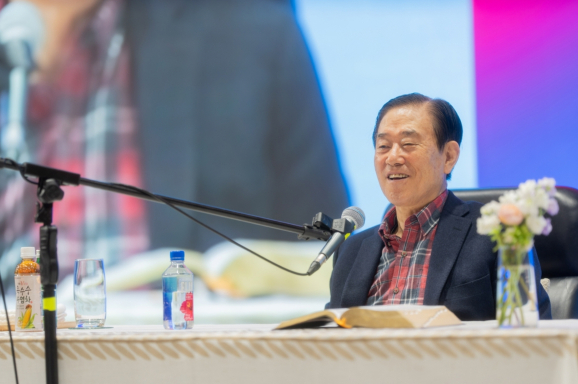
It is the season when cold winds cut through our collars. And beyond the winter that returns with the turning of the year, there are winters that arrive in our lives without warning—sudden, ruthless, and unforgiving. When the blizzard comes in the form of financial lack, severed relationships, or illness, we instinctively look for somewhere to hide, somewhere to endure. Two thousand years ago, the aged apostle Paul—confined in a cold underground Roman prison—was also feeling the biting chill of an approaching winter. Writing to his beloved disciple Timothy, he makes two requests: “Do your best to come to me soon… and when you come, bring the cloak.” What the great evangelist, with death looming, asks for is not a grand theological proposition, but a worn cloak to cover his aching body—and the warmth of human presence.
On a stormy night, the only refuge where a soul can rest
In Victor Hugo’s immortal masterpiece Les Misérables, there is a scene that pierces straight to the essence of the temple (a sacred dwelling). Jean Valjean, released after nineteen years in prison, trembles with cold and hunger because the stigma of being a convict leaves him rejected everywhere. The last door he knocks on is the home of Bishop Myriel. When every door in the world has been shut, the bishop welcomes him and says in effect: “This is not my house; it is the house of Jesus Christ. This door does not ask a person’s name—only whether the person is in pain.”
This moving moment resonates deeply with the sermon messages Pastor David Jang delivered from 2 Chronicles 7 and Zechariah 14. Pastor David Jang does not reduce the temple to the mere idea of a building. Like Bethel’s wilderness, where Jacob slept with a stone for a pillow, he unfolds a theological insight: the temple is “the holy place where heaven and earth meet, and where God and humanity commune.” God’s promise to Solomon—“My eyes and my heart will always be there”—declares to us, who find ourselves in storms of tribulation today, that the temple is not simply a religious facility but the soul’s one true refuge.
When the world staggers before massive waves like a pandemic and economic crisis, what responsibility must the church bear? Pastor David Jang emphasizes that the more severe the tribulation, the more the temple must recover its essential identity as “a house of prayer for all nations.” Just as what Bishop Myriel offered Jean Valjean was not merely a bed and food but the dignity of a human being restored, the church must become a spiritual fortress where the wounded and cast aside can come, meet God, and be healed. Prayer is the key that opens heaven’s door, and the channel through which God’s power flows to heal a suffering land.
The warmth of reconciliation that melts a cold prison floor
Yet the temple’s role does not end with being a refuge. Through the words of 2 Timothy chapter 4, Pastor David Jang delivers a weighty truth: the real warmth that must fill the temple is “love and reconciliation.” Paul’s request from prison—“Get Mark and bring him with you”—is a startling reversal. Mark was the one who, during an earlier missionary journey, abandoned the work because it was too difficult, causing Paul deep disappointment. The fallout even led to the painful separation between Paul and Barnabas. And yet, in the final winter of his life, Paul forgives Mark, welcomes him again, and acknowledges him as “useful to me for ministry.”
This dramatic reconciliation is precisely the gospel’s great power. Pastor David Jang observes that if the “cloak” Paul asked for would shield him from physical cold, then calling for Mark was an act of love that would thaw the coldness of the soul. The same thread runs through Paul’s appeal to Philemon to receive Onesimus—the runaway slave—as a brother. Through Scripture meditation, we come to recognize a piercing truth: no matter how magnificent the building or how splendid the ceremonies, if there is no forgiveness, no reconciliation, and no fervent love for one’s brother, that place is nothing but a pile of stones filled with chill. The power that overcomes a brutal winter is not a system, but a cloak of love that covers one another’s faults.
Welcoming spiritual spring on knees bent in prayer
Even now, we live amid news of war and famine, conflict and division—like passing through a long winter night with no end in sight. Yet Pastor David Jang does not despair. Like Zechariah’s prophecy, he is convinced that in the day of tribulation God will surely make a way of escape, and that way opens when we bow our knees in prayer. The crucial question is what we prepare during that season of trial.
Is our temple warm today? Or has it become an icy room because of hatred and condemnation toward someone? Pastor David Jang’s message is unmistakably clear: wisdom for passing through tribulation is earnest prayer toward God and concrete reconciliation toward our neighbor. When we become one another’s “Mark,” and when we become one another’s “Onesimus,” the church is finally completed as the true temple that grants a peace the world cannot give.
Paul was confined to the narrow space of a prison, yet his soul was freer than anyone’s within grace—because he looked beyond winter’s approaching death to the eternal crown of righteousness. We, too, need the eyes of such faith. Even when circumstances are hard and reality feels cold, put on the warm cloak of love and kindle the fire of prayer. God will surely respond upon that prayer and love, and in the end He will grant a radiant spiritual spring to our lives. This is God’s comfort and promise given to us—one that pierces through every age.
1. A Proper Understanding of Suffering and the Hope of Glory
When we meditate deeply on Colossians 1:24–29, as preached by Pastor David Jang, we realize how crucial the apostle Paul’s understanding of “suffering” truly is. Through multiple sermons and lectures, Pastor Jang emphasizes that suffering is never in vain; rather, it is an indispensable process within God’s plan of salvation that inevitably accompanies glory. This does not mean we glorify pain itself or naïvely affirm suffering. Rather, it teaches that for Christians, the suffering we encounter reveals the “glory” hidden within us. In particular, Paul’s confession in Colossians 1:24—“Now I rejoice in my sufferings for your sake”—serves as an excellent guide for how believers should respond when trials come. By summarizing Paul’s posture toward suffering as “joy,” Pastor Jang contrasts the worldly perspective with one of faith, urging us not to lose heart or give up even in severe tribulation or adversity. Instead, he insists that we discover the meaning of such suffering, reaffirming that it ultimately serves as a pathway to glory.
Pastor David Jang recommends examining Paul’s view of suffering as found in other letters such as Second Corinthians and Romans. For instance, Romans 8:18 says, “For I consider that the sufferings of this present time are not worth comparing with the glory that is to be revealed to us,” showing the close connection between suffering and glory. In 2 Corinthians 1, Paul confesses that his suffering led him to rely on God more deeply, through which he experienced comfort. Pastor Jang emphasizes that Paul’s confession is not merely a personal anecdote of the apostle but a “law of faith” given to all believers. In other words, when suffering comes, we should not only feel sadness or discouragement but also trust in the mysterious plan of God that connects suffering to glory. In that trust, we can endure with expectation and hope.
Even to the Colossian church—a community Paul did not personally evangelize or found—he proclaims that, despite his own imprisonment, the gospel has not been hindered at all. Pastor Jang cites Philippians as an example, noting how Paul, in the extreme situation of prison, exclaims, “Rather it has served to advance the gospel.” From this, Pastor Jang reiterates that even when suffering comes, it can never halt God’s work but is instead used to fulfill God’s purpose. Ultimately, suffering is for the sake of the Lord’s kingdom, a holy path that leads us to participate in the resurrection of the Lord who passed through the cross. Pastor Jang repeatedly points out that without the way of the cross, there can be no resurrection and no glory. For Christians, therefore, it is only right that we walk this path, and here Paul sings of “the joy of participating in these sufferings.” This is the essential point.
Furthermore, Colossians 1:24 mentions “filling up what is lacking in Christ’s afflictions in my flesh for the sake of his body, that is, the church.” This indicates that Paul viewed his own suffering as something he gladly “fills up” to build and expand the body of Christ, the church. Pastor Jang explains in detail that, although complete salvation was already accomplished on the cross, the expression “what is lacking in Christ’s afflictions” can sound contradictory at first. What Paul means by “remaining suffering” is the portion that the church community collectively bears and participates in as God’s grand work of salvation unfolds and is completed in the world through the church. Christ’s death and resurrection opened the door of salvation fully, yet until the end of the age, there remains for the church the labor and hardships of preaching the gospel and walking in the Lord’s way. Paul, by filling that up in his own body—that is, by regarding all the tribulations and adversities he endures for the sake of establishing the church as a joy—demonstrates a real process by which suffering turns into glory. Pastor Jang insists that believers must firmly imprint such a life and confession of Paul in their hearts.
In conclusion, Pastor Jang argues that the true understanding of suffering is not merely “endurance” or “positivity” but a faith-based insight directly linked to “glory.” He repeatedly stresses the need to view suffering as a doorway to glory by carefully observing the impact of suffering, the direction it leads, and the results it brings, and by adopting an attitude of deeper reliance on God through it. Additionally, Pastor Jang often references 2 Corinthians 4, where Paul declares, “We are afflicted in every way, but not crushed; perplexed, but not driven to despair.” He explains that these words clearly show the spirit of one who understands suffering through faith. Such an attitude is possible only upon the firm assurance that our redeemed status is anchored in heaven, that Christ’s Spirit is with us, and that the resurrection and eternal kingdom await us. And this attitude is by no means an empty, baseless hope, for it is founded upon the concrete event of the cross and the resurrection—a “substantial hope,” as Pastor Jang calls it.
Paul revisits the mystery of salvation in Colossians 1:25–27, referring to it as something “hidden for ages and generations but now revealed to his saints.” Pastor Jang highlights that from ancient times, God’s plan of salvation was hidden within human history and was finally made clear through Jesus Christ. This is the greatest source of assurance and joy for believers. Because of the cross and resurrection of Jesus Christ, the door of salvation has been fully opened to all Gentiles, and it is through this that churches like Colossae and churches today are included in the gospel. Hence this gospel can truly be called the “hope of glory.” Pastor Jang explains why Paul refers to salvation as a “mystery” (mysterion) and urges us to be thankful and filled with wonder that we live in an era when this marvelous secret has been revealed.
Ultimately, Pastor Jang reiterates that believers must remember Paul’s teaching: “The sufferings of the present are by no means the end, but merely a light momentary affliction when compared to the glory God has prepared.” Without such faith—believing that any suffering will surely lead to glory in God’s redemptive plan—it is difficult to walk the narrow path of the world, the way of the cross, as a Christian. That path leads to resurrection, reward, and glory. Because of that, we can grasp the paradoxical expression in Colossians 1:24: “I rejoice in my sufferings.” Pastor Jang teaches that this is indeed the posture of a true Christian.
2. God’s Plan of Salvation, the Secret of the Gospel
Pastor David Jang places great importance on Colossians 1:26–27, where it says, “the mystery hidden for ages and generations but now revealed to his saints.” The Greek word for “mystery” here is mysterion, from which the English word “mystery” derives. Paul proclaims that this mystery “is now revealed to his saints,” and Pastor Jang interprets this as the decisive unveiling of God’s “plan to save humanity,” which had been prophesied since Old Testament times but never fully understood until the cross and resurrection. Indeed, Ephesians 3 addresses a similar context, emphasizing that “the mystery once hidden has now been revealed even to the Gentiles.” Following Paul’s logic, Pastor Jang stresses how we should notice that God’s plan of salvation extends beyond Israel to all humankind.
Pastor Jang specifically references Romans 9–11 to show how Paul proclaims that the gospel, ironically and mysteriously, expanded to the Gentiles because the originally chosen people—Israel—failed to accept it. Israel’s rejection of Jesus Christ did not obstruct God’s salvation plan but instead served as the very “trigger” for the gospel to spread throughout the entire world. Concerning this, Paul exclaims, “Oh, the depth of the riches and wisdom and knowledge of God!” (Rom. 11:33). Pastor Jang believes this passage illustrates how God’s “mystery” has unfolded in human history. From long ago, God had a plan to save humanity—not limited to a particular people or group but opened to the whole world—and thus revealed the fundamental universality of the gospel.
Continuing, in Colossians 1:27, Paul pinpoints the core of this mystery as “Christ in you.” He then calls it “the hope of glory.” Pastor Jang places special emphasis on “Christ in you.” In other words, the secret of the gospel is not just external knowledge or fact; rather, it is a power and relationship that operates tangibly in the life of the believer through the indwelling Holy Spirit. That relationship becomes the driving force for believers to live as new creations. In Romans 8, Paul declares, “Anyone who does not have the Spirit of Christ does not belong to him,” and, “If Christ is in you, although the body is dead because of sin, the Spirit is life because of righteousness.” Pastor Jang continually teaches that this indwelling Spirit is the essential power of salvation. It does not stop at a mere prayer of repentance or acceptance of a particular doctrine but rather signifies a real power that transforms us in every facet of life.
Thus, the secret of the gospel is not limited to the declaration, “My sins have been forgiven once for all, and I am eternally saved.” It also includes intimate union with Christ, the holy indwelling of the Holy Spirit, and the hope of eternal life. Pastor Jang explains that this is at the heart of Colossians 1:26–27. Moreover, when Paul says, “Now it is revealed to his saints,” it refers not merely to the Jews or the people of Israel; it encompasses the universal church, including the Gentiles. Hence the predominantly Gentile church at Colossae also participated in this mystery of salvation, just as churches around the world do today. This fact itself is evidence that “the secret of the gospel has been extended to all humankind.”
Pastor Jang urges believers not to lose sight of the overwhelming wonder that God’s grand plan of salvation, which has spanned all ages, has reached each of our lives. People often assume their faith is the result of random choices or environmental factors. In reality, however, we must realize that we have been included in the salvation plan God prepared from before time began. Once we grasp this, our life of faith ceases to be a mere religious exercise, transforming instead into participation in the majestic work of God’s salvation. For this reason, Pastor Jang repeatedly exhorts us to meditate deeply on how much meaning is contained in that single phrase: “the mystery of the gospel has been revealed to the saints.”
Paul, in Acts 28, laments the state of the world that “has eyes but does not see, and has ears but does not hear,” because it does not know this mystery. Pastor Jang calls this the “mystery of unbelief,” describing it as “the tragedy of not seeing the open way of the gospel so clearly laid out by God.” Indeed, Pastor Jang, who has traveled to many countries, planting churches and equipping pastors, testifies that he has seen countless individuals who neither hear nor see even when the gospel is preached. At the same time, he has also witnessed many who, having accepted God’s grace, are filled with inexpressible joy. Ultimately, recognizing or failing to recognize the mystery of the gospel is the defining fork in the road of life, and it is also “the wisdom that leads to salvation.” Although the mystery remains hidden, it is by no means entirely blocked; it is God’s gift, open to those who come by faith, guiding them to the center of glory, teaches Pastor Jang.
Concluding this point, Pastor Jang exhorts the church today to revisit this secret of the gospel. It is not just a matter of denominational or doctrinal differences but speaks of the vast salvation narrative God has designed from before creation, fulfilled through the cross and resurrection of Jesus Christ, and applied throughout the world by the Holy Spirit. We locate our own faith within that unfolding narrative. When this realization becomes clear, faith moves beyond mere religious routine or habit to become an act of joyful participation in the transcendent and glorious drama of salvation. This is precisely what Pastor Jang calls “the life of believers who hold fast to the secret of the gospel.”
3. The Indwelling of the Holy Spirit and the Life of the Saints
Turning to Colossians 1:28–29, Pastor David Jang emphasizes the “complete maturity of believers” as the ultimate aim to which Paul aspires. Colossians 1:28 says, “Him we proclaim, warning everyone and teaching everyone with all wisdom, that we may present everyone mature in Christ.” Pastor Jang draws attention to two key verbs here: “proclaim” and “teach.” He notes that believers are both heralds who proclaim the gospel and teachers who instruct others in its deeper meaning, thus nurturing and establishing them. This corresponds exactly with the Great Commission in Matthew 28, where Jesus commands us to preach the gospel to all nations, make disciples, and teach them—baptizing them in the name of the Triune God. Pastor Jang repeatedly emphasizes that this is the very purpose of the church’s existence.
How then can believers fulfill this mission? According to Pastor Jang, Colossians 1:29 provides the answer: “For this I toil, struggling with all his energy that he powerfully works within me.” The “powerfully works within me” refers clearly to the Holy Spirit. Paul is not proclaiming the gospel through his own intellect or strength; rather, he endures suffering, faces danger, spreads the gospel, plants churches, and leads believers to maturity through the power of the indwelling Holy Spirit. In this context, Pastor Jang often cites 1 Corinthians 3:16 and 6:19: “Do you not know that you are God’s temple and that God’s Spirit dwells in you?” He reminds believers that, having become temples of the Holy Spirit, they should not be governed by worldly values and desires but should recognize themselves as God’s holy dwelling place.
The fact that the Holy Spirit dwells within us is both the definitive proof of our salvation and the foundational principle guiding our daily lives. Pastor Jang warns against reducing the doctrine of the Holy Spirit’s indwelling to a mere “theological concept” or “theory,” urging believers to ponder daily how to hear the Holy Spirit’s voice and bear the fruit of the Spirit in practical life. As detailed in Galatians 5:22–23, the fruit of the Spirit includes love, joy, peace, patience, kindness, goodness, faithfulness, gentleness, and self-control—these are the very traits that manifest when the Spirit actively works within us, transforming our character and serving as the most visible indicator of a believer’s changed life.
Along with the indwelling of the Holy Spirit, Pastor Jang underscores the word “stewardship” when he speaks of our earthly ministry. In Colossians 1:25, Paul says, “I became a minister of the church according to the stewardship from God that was given to me for you” (NIV). This implies a responsibility similar to that of a servant managing the master’s property. All that we possess—our lives, talents, finances, time, and especially the gospel—has been entrusted to us by God, and we have the duty to manage and use these resources faithfully for “proclaiming the gospel,” “serving our neighbors,” and “building up God’s kingdom.” Pastor Jang emphasizes that this sense of responsibility as stewards is an inevitable stance required of believers who are indwelt by the Holy Spirit. In other words, nothing we have truly belongs to us; rather, we must devote it wholeheartedly to proclaiming the gospel, serving others, and establishing God’s kingdom.
Pastor Jang points out that many modern churches and believers sometimes fall into spiritual lethargy or helplessness, often due to the human perception that “I alone must bear all the responsibility,” or that “serving the church requires too many sacrifices and hardships.” But, as seen in Paul’s example, genuine transformative power comes from “the One who works mightily within us,” namely the Holy Spirit, and we must never forget this, Pastor Jang stresses. Even though Paul was imprisoned, churches in places like Colossae and Philippi continued to grow in the gospel, showing us that it depended not on Paul’s personal abilities but on “God’s power.” Hence, Pastor Jang persistently advises believers, “Rely on the Holy Spirit. Be conscious of the indwelling Holy Spirit every moment.” Without the Holy Spirit, any attempt to build the church in our own strength will inevitably meet its limit and result in discord.
Pastor Jang has personally witnessed multiple examples of the Holy Spirit’s tangible work in various mission fields and churches across many nations. In places where it was difficult to preach the gospel, believers persisted in prayer, and astonishing doors opened. Under persecution, churches often became stronger rather than collapsing. For this reason, he testifies that Paul’s declaration—“the suffering that comes in serving the Lord is never in vain”—remains as valid today as ever, and it applies to anyone who devotes themselves to ministry in the church. As in 2 Corinthians 4, where Paul says, “We are afflicted in every way, but not crushed; perplexed, but not driven to despair,” those filled with the Spirit can stand again even in the worst adversities and persecutions, thanks to “the help of the Spirit who dwells in us.” Pastor Jang insists that this is precisely the believer’s privilege and power.
Moreover, Pastor Jang encourages believers to go beyond merely “overcoming suffering” and instead actively build up the church, serve their neighbors, and rejoice in spreading the gospel. In Philippians, Paul, even in prison, exhorts believers to “rejoice,” implying that the very acts of proclaiming the gospel and serving the church community are themselves sources of joy. Indeed, Pastor Jang has encountered many church leaders and believers who, despite financial lack or intense persecution, experience great joy in worship and service. This kind of joy simply cannot be explained by worldly logic; he describes it as “a gift from God made possible by the Holy Spirit’s presence.”
Thus, Colossians 1:24–29 covers themes of “suffering and glory,” “the secret of the gospel,” “the indwelling of the Holy Spirit and the believer’s stewardship,” and “proclaiming the gospel and nurturing believers”—all interconnected by the cross, the resurrection, and the indwelling Spirit of Christ. Finally, Pastor Jang underscores, “Now that we possess this truth, we must arise.” Though the path of faith is certainly not an easy one, it is the way of the Lord, who walked it first, and the Holy Spirit walks with us. Knowing this, we can traverse the narrow and treacherous path with the certainty that it ultimately leads to glory. Clinging tightly to the message of Colossians, believers need not drift along like dead fish in the current of life but can live dynamically, filled with joy, gratitude, and hope, Pastor Jang encourages.
Pastor Jang concludes by citing this passage, blessing all believers so that, like Paul, they may “rejoice in sufferings” in the midst of paradox and faithfully fulfill their calling. If all our labors in serving the church and mission fields ultimately contribute to spreading the mystery of “Christ in you” to many souls, then no suffering is ever wasted. This is the core message of Pastor David Jang—“to participate joyfully in suffering, to serve the church through the power of the Holy Spirit, and to look toward glory.” This message, Pastor Jang explains, is confirmed throughout Paul’s other letters such as Ephesians, Philippians, Romans, and Second Corinthians, and it is the essence of Paul’s theology that he passionately reminds modern believers of time and again.
By carefully studying even this short passage—Colossians 1:24–29—we discover God’s plan of salvation, ordained from before the ages, the secret of the gospel, the church’s calling to fill up what is lacking in Christ’s afflictions with joy, and the divine power we have to endure all suffering and proclaim the gospel through the indwelling Holy Spirit. If we truly grasp all these things, Pastor Jang declares, our life of faith will advance to an entirely new dimension. He repeatedly emphasizes, “Remember that you must have the Spirit of Christ in you to belong to Christ. That Spirit will lead you to glory.” A life filled with the Holy Spirit is, in the end, the one sure and certain way believers must walk. This is the stance Pastor David Jang has reiterated many times, urging believers to put it into practice, and it forms the bedrock of the gospel life that all Christians should pursue—both within and beyond the church walls.